
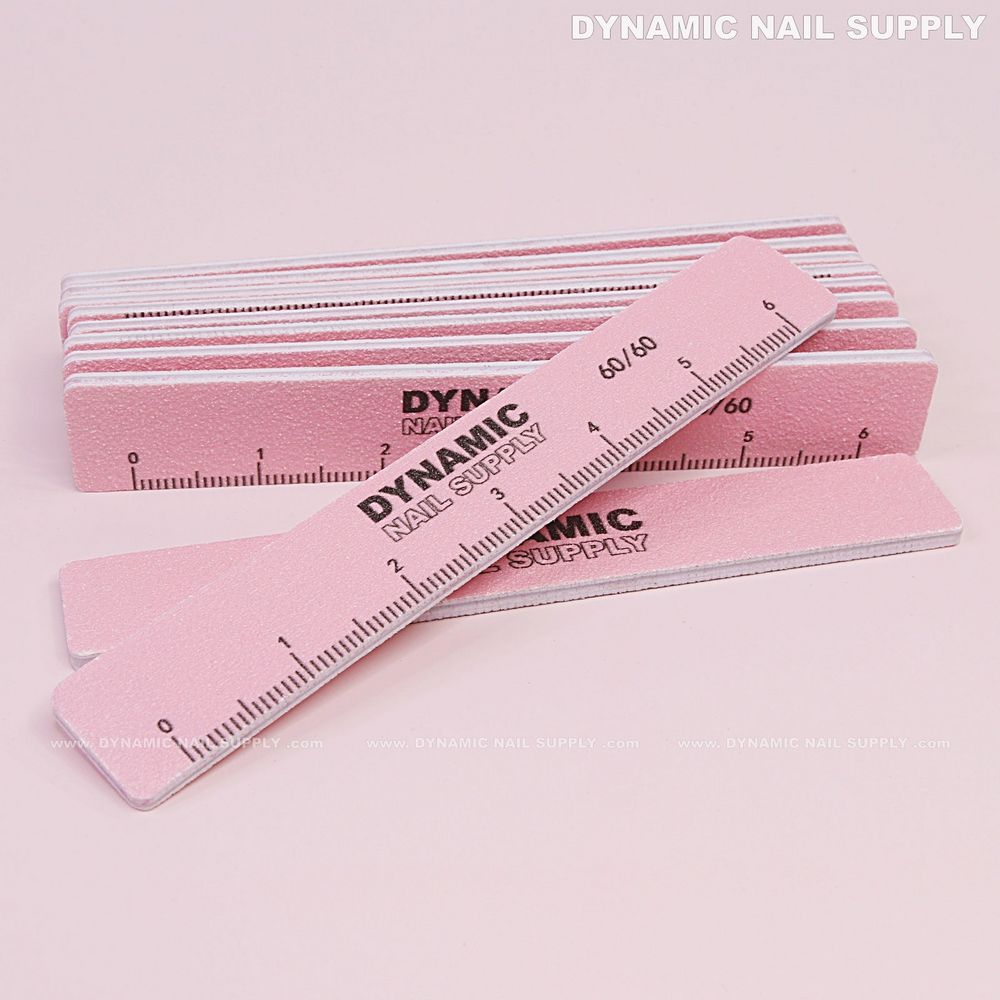
if you remember only one thing: the tool matters as much as your hand. A Square 60/60 Extreme Coarse 10 Emery—double-sided, square, dusty-pink—is built for one job: fast, controlled material removal on enhancements.
Tool identity and where it fits
You want rapid debulking. You want repeatable control. A 60 grit square emery board gives both. The square shape sits flat against the nail. That gives predictable contact across tips and sculpted apexes. The double-sided 60/60 grit means either face works the same. The pack of ten keeps you stocked for heavy chair time.
Station setup and prep
Work smart. Lay out a clean tray. Have a dust brush and a small bin for debris. Keep an electronic file or finer hand files ready to switch to. Position lighting so you see the nail surface clearly. Use light tension with your free hand to stabilize the client’s finger. Keep the printed ruler on the file visible; it helps when you reproduce length quickly.
Step-by-step fast bulk removal
- Mark your stop point. Visualize how much product must go. Work only to that line.
- Seat the square edge flat. Use the broad face, not the tip, for large surface cuts.
- Use steady, short strokes. Move along the nail rather than back-and-forth on a single spot.
- Apply moderate pressure. Let the coarse abrasive do the work. Don’t force it; forcing creates heat.
- Debulk in zones: free edge first, then apex, then near cuticle only if product is thick there.
- Check often. Stop and inspect after each 10–15 seconds of filing to avoid over-reduction.
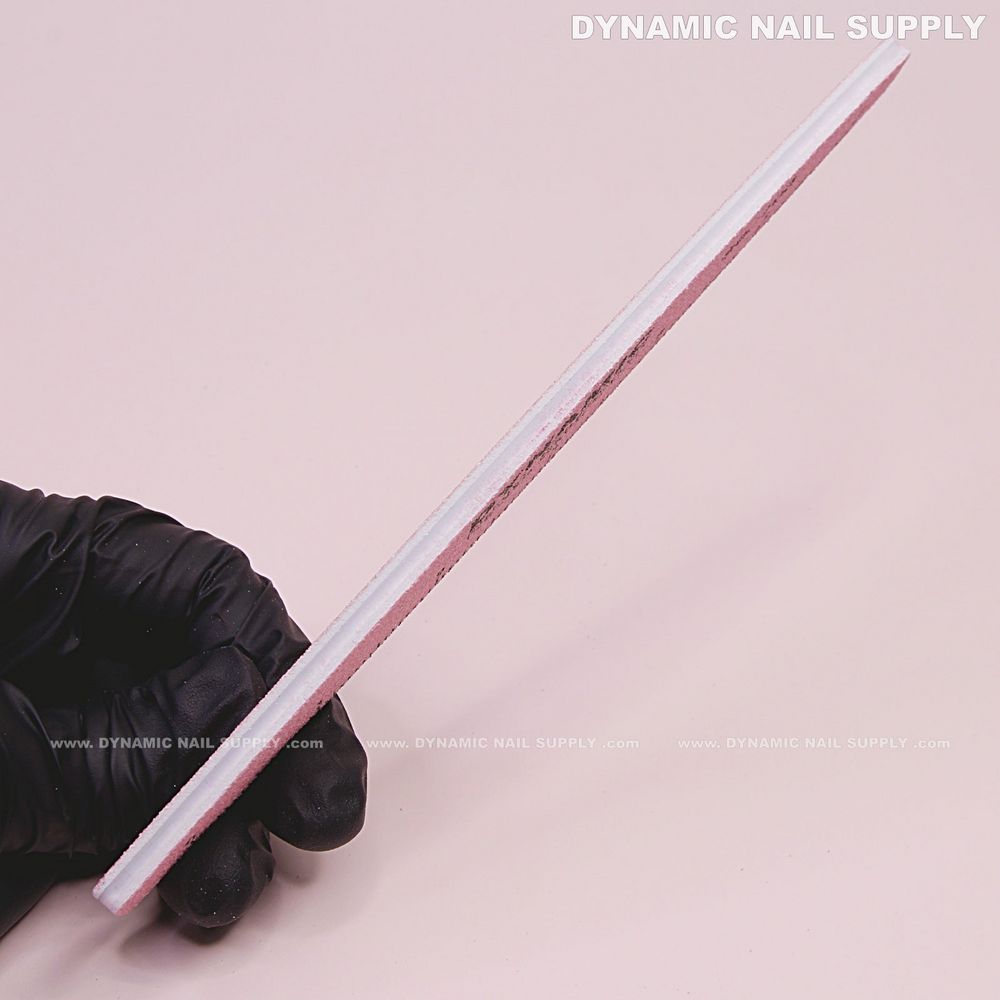
Quick note on the visual: the soft dusty-pink surface and white core make it easy to spot wear. Replace files when the grit clogs or the printed ruler fades.
Mid-service reference:
Quick link to the exact supply you’ll want on hand for fast runs:
When to switch to finer grits
The 60 grit square emery board reduces mass fast. Switch when you reach the shape and thickness you planned. Move to 80–100 grit next for refining. Use 100/180 or 180/240 for final blending and smoothing before primer and product. If you feel heat or see micro chips at the edge, stop and choose a softer approach.
Safety and handling
- Not for natural nails. The grit is extreme; it will thin healthy keratin quickly.
- Control motion and pressure to avoid heat build-up. Cool the surface with brief pauses if the client feels warmth.
- Sanitize between clients. The hardboard core is water-resistant and washable, but follow your salon sanitation rules for nonporous vs. single-use tools.
- Inspect edges before use. A damaged core can catch and lift enhancements.
Practical tips for speed and consistency
- Use the printed ruler to match length across digits quickly.
- File multiple nails in the same zone in a pass to maintain rhythm and reduce client fatigue.
- Keep at least two packs on rotation during busy shifts. At about $6.99 per pack, costs shift fast when you file aggressively—prices may change.
- Store the pack flat. That keeps the edges uniform and the printed guide readable.
When not to use this board
Do not use the 60 grit square emery board on natural nails. Avoid fine sculpting near the skin or thin free edges. If the enhancement is already compromised or lifting, reconsider aggressive filing; you may need removal rather than debulking.
Three quick checks before you finish: has mass been reduced to the planned profile? Is the apex intact where you need structure? Is the surface free of heat marks? If yes, switch to finer tools and continue.
Mini FAQ
- How long should a single file last for salon use?—Depends on volume and product; watch the grit and replace when performance drops.
- Can I wash and reuse the board?—Yes, it’s water-resistant; follow your sanitation routine.
- Is this safe on thin enhancements?—No. Use a gentler grit for thin or fragile overlays.
